From the moment the words left her lips, I knew they would never leave my mind until I clearly  understood why she said it. Since then, I have carried this killer curiosity as to just what exactly Oprah meant?! The incident that prompted my inquisitive nature to kick into overdrive took place quite a few years ago. So many years ago in fact, that I don’t recall what year it was other than the late 1990’s. To further complicate clarity, the “act” that Oprah committed was during her former daily talk show that made reference to an earlier Oprah show which was most relevant. Clearly, I’ve been carrying this for a while. So I say all that to preface what I’m about to say because of the duration of time that has passed and my sketchy recall of the details. Still, the gist of the incident is forefront and remains intact.
Now most of you who follow me likely know well at least 2 things about me: 1) my inquisitive nature is infinite and 2) I know enough to know that the odds of my querying Oprah are about as likely as winning the Powerball jackpot. But somebody’s got to win it…eventually! And you’ve got to play to win (in more ways than one). Still, the reality is that I will somehow have to surmise what Oprah meant as opposed to querying her directly.
Since the airing of that show, I have repeatedly played out in my mind the possible response(s) Oprah might have, but none of them undoubtedly explain or clarify her comment. Then I had my own “Aha!” moment. Somewhere out there “in the world”, there’s got to be the answer that I seek. After all, what are the odds of my meeting Oprah AND getting the chance to pose my most important question? (Note to self: pick-up Powerball ticket(s) for  half-billion dollar jackpot). I do have some thoughts regarding the nature of Oprah’s comment and what she meant. Some of you may feel my question is moot. So, I’m turning this one over to you. Suggestions and food for thought are welcome so, please, do share!
Here’s the deal –
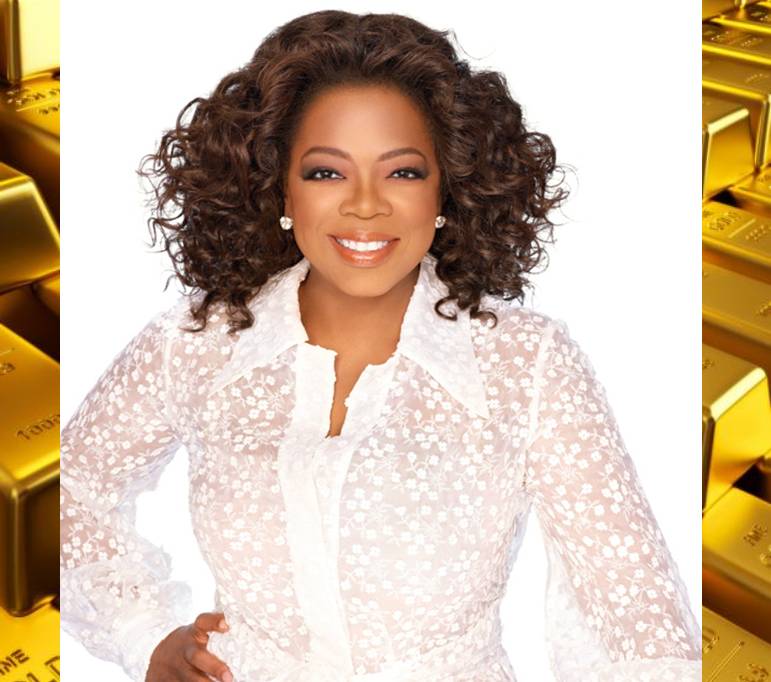 Original Oprah Show: During an interview with Tiger Woods, one of the best, world-renowned, professional golfers of all time, Oprah got to the subject of racial/ethnic identity and inquired as to what Tiger considered himself to be, given his father is predominantly African-American and his mother is predominantly Asian. Tiger’s response was a term that he created during his youth to describe the myriad of races that reflected his racial genetic composition and evidently impacted his perceptions and, hence, his reality. Claiming to be neither black nor white, Tiger’s terminology for how best to describe him from a racial/ethnic perspective was “Caublinasian – Caucasian, Black, Indian, and Asian”. “Brilliant!” I thought when he said it. Can’t confine him to one box or identity. Oprah asked the question and Tiger answered it. End of story. Not so…
Fast forward to a subsequent Oprah episode where details of the show, including the guests, are even sketchier except for what Oprah said that has brought me to where I am now. Oprah said it, but I didn’t get it. I’m paraphrasing, but here it is –
“I knew Tiger was in trouble when he said it (Caublinasian)”. I believe she also made reference to somehow trying to help Tiger out of the “hot water” or “situation” he had gotten himself into as a result of his “Caublinasian” comment.
What? Tiger’s in trouble?! Unheard of! (And it was at the time)
I have 2 primary thoughts as to why Oprah said what she said:
1) African-Americans were, shall we say, less than thrilled with Tiger’s identity as “neither black nor white” and potentially perceived him as turning his back on his black roots, further implicating him as not being “black enough”. Similar concerns of “not being black enough” ran rampant among African-Americans regarding our current biracial African-American President during his initial candidacy. As a fellow biracial African-American, sometimes we just get tired of other people’s perceptions and what impact, if any, they have on us. Likely not the impact expected from such questioning of one’s identity. History dictates that having one drop of black blood as the equivalent to being black. Politically, Tiger’s perspective results in one less check mark in the exclusively African-American census box which diminishes numbers and as we know, there’s power in numbers. And then there’s Tiger’s numbers on the golf course as one of the greatest golfers in the world. Feel the power? How about the pride? But who can claim him as their own? How about America? And if we must be detail-oriented, he clearly is not a white American, so people of color; prepare to take your place in the line of people proud enough to still call Tiger their own.
2) Because Tiger begins his newly fangled identity, “Caublinasian”, with Caucasian, he may, again, be perceived as denying his blackness due to the order in which he identified himself. Not sure what drove the development of his self-proclaimed racial/ethnic identity, but maybe, just maybe, he played around with the racial combination (having been asked the “What are you anyway” question a sufficient number of times) and Caublinasian happened to have the nicest flow. It does have a nice ring to it and permits Tiger to express his racial identity in its entirety. It also brings a “lightness” to the heavy issue of race in America. It’s about being all-inclusive, not exclusive. It’s about pride, not shame…on both sides of the green.
I don’t know if either of the reasons I mentioned were the reason Oprah said what she said and I probably never will. I am very curious to hear YOUR perspective.
Clearly, we still have a ways to go before race finds its respectful place in our nation. When and how that happens is to some extent contingent upon our willingness to have open, honest, and perhaps difficult dialogue about the experiences and relevance of racial identity in our communities and across the nation. One such group, NewCORE, which stands for New Conversations On Race and Ethnicity, is doing just that in the Philadelphia area in an effort to create “a more perfect union”, neighborhood by neighborhood. It is groups like this that will help generate the conversation in the grassroots communities that can lead the way to increased respect, understanding, and a collective pride as We, the People, of the United States of America. As more and more of these types of conversations take place, we will find the proper and proud place for race in America.
Can we talk?
See You Next Wednesday!  OXOXOXO
 growgratitude.com
Leave a comment