Being Biracial: “What Are You Anyway?”

I’ve lost track of the number of times that I have been asked, “What are you, anyway?” I don’t think losing track is as much a result of Rita Profilethe length of time I’ve lived, as it is a reflection of how frequently I’ve been asked that question during the time that I’ve lived.  What has changed during that time frame, aside from the number of people prone to being asked the question, “What are you, anyway”?  Perhaps it’s a willingness to share, or more so, a deepening desire to discuss or express the experiential intricacies of being biracial in America in an effort to increase insight, understanding, and acceptance of biracial individuals.

It strikes me that the question is “what” as opposed to “who”, but I guess if asked “Who are you anyway?” the door would open for a range of responses and reactions. The same could be said of the “what” question. Except in America, if asked the “what are you” question, one of the initial potential responses is likely to be in reference to race or ethnicity.  For the biracial American, it is the first probable response primarily due to the frequency of which we are asked the question.  We’re not hung up on it, you are. We know what’s coming. America is a focused country when it comes to navigating “what” we are dealing with in contrast to “who” we are dealing with. After all, accurately or inaccurately, one helps inform the other, does it not? At the very least it allows the potential for a stream of preconceived ideas and beliefs to begin flowing. On the other hand, it can open a door of opportunity for creating conversation and greater understanding. It all depends on how you choose to view it, given being on the receiving end of the “what–are-you” question.

“What are you, anyway” became a much more pressing question when my father was retiring from the military and we began life as American civilians.  I don’t really recall issues of racial identity prior to that time, probably due to my young age. That’s an important distinction to note regarding my experience relative to my siblings’ and other biracial or multi-racial Americans at that time. This was the early 1970’s, small, back-mountain town, overwhelmingly white and an interracial family known around town before we arrived in town!

My father would complete his military service to our country overseas while his family settled into the th_air_force_logo(1)community in which he grew up. My parents felt this was a suitable community to remain until my father retired. And though there had been historically a miniscule number of African-Americans in the town when my father was growing up, that number dwindled until all-tolled, there may have been 15 people of color, including me and my 6 family members (well, 5 given my mother is white). Most were adults or elderly. And so it was in this small back-mountain town that we rode in and shook things up or rather, I should say, got shook up… or both.

For many of the children that I attended school with and their family members, I or one of my family members were the first “real, live” black people they ever saw aside from the rare television shows with black characters/roles -if one could consider television at the time, “real and live”. Now, take me and my “high-yellow” siblings, put us all together with my black father, white mother, and black grandmother, and oh boy, ain’t we got fun?!

Did I mention it was the 1970’s?…

I was not trying to be white as I was sometimes accused, predominantly by people who looked more like me than those who didn’t. I was just trying to be – which became exhausting, if not impossible. What did you expect? All my friends were white. All my classmates and teachers were white. All my coaches were white. The bus drivers were white. All the cute boys (and their parents) were white. All the business owners and church members were white. And at home, my mother was white (and British). And when my father returned home from overseas nearly two years later, he was black, just like when he left! And his children were/are black like him. What?! And thus began the debates that my father and I would engage in (and sometimes my mother, while my grandmother listened silently from the next room). Our debates were sometimes heated as can be the case when discussing matters of race. But oh, how I loved debating with my father and would love to know what his stance would be today had he lived the past 30 years. Still, I got what he was saying and trying so desperately to get me to understand: I am black because that’s how “the world” sees me and will treat me. Still, I wasn’t trying to be white. But I was trying to understand how my white mother disappeared from the equation. What do you do with her? Can we hide her in the closet?! No, because sooner or later she’s going to come out (or at least want to)!

bth_heartenglandMy mother made the home as did many and most mothers today. She was an immaculate housekeeper, did the cooking, shopping, laundry, took care of her 5 children and mother-in-law, and most other things women who stayed at home in the 1970’s did. In other words, she was a presence that would invariably and inevitably have a personal and powerful impact on me and my siblings. Did I mention that my mother is white and British? It wasn’t about hiding that part of me, consciously or unconsciously. It was about how to incorporate the other half of me and express it without being ridiculed for it. I couldn’t hide my mother if I tried and I had no desire to. So, as a teenager I began to learn the language of being biracial. At the time, mulatto seemed to fit best. And so I became a mulatto, but then that label usually warranted explanation or elaboration. Ten minutes later I would part ways with whomever, probably completely unsure whether I answered their “what are you, anyway” question to their or my own satisfaction.

Why do people feel compelled to quench their curiosity of knowing what you are?

It’s all about identity and identity can be fluid. When you’re developing a sense of self or identity during adolescence, the person of color and the biracial person also have to develop a racial identity, unlike white Americans. I’ve been all kinds of “identities”, but I’ve never been white. My identity has always incorporated my black side and at times black was exclusively how I described my racial identity. It kept things simpler, but inside I knew I had to somehow reconcile the real, whether you like it or not, other half of me that clearly contributed to the creation of who I am in more ways than one!

Oh no, this must be my attempt to be white. It’s all about perceptions. I could claim my African-American roots and was expected to do so without claiming my other half; the half that completed the whole. How could one be faulted for that? But I was. It was the one drop rule. Historically, if you had one drop of black blood coursing through your veins, you were considered black and therefore profitable when it came to tallying a slave owner’s assets and property. I don’t have a problem being black. I love who I am. But who I am, on that level, is not complete without acknowledging my mother’s blood pumping through my veins. Who I am, on that level, does not honor the British cultural influence and heritage that arguably has influenced a significant part of who I am and how I see the world.  Who I am includes and incorporates both races and both cultures as well as my own experiences and personal perspectives. I am a product of my environment in many ways.
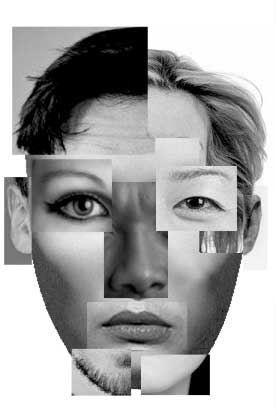
BiracialAsk me what I am today and I will tell you that I am human. I am American. And specifically, I am a biracial, bi-cultural African-American or an African-American who happens to be bi-cultural and  biracial or “mixed”. For the moment, I’m satisfied with that identity and I think my dad (and mom) would be too.

So, what are YOU anyway?

See You Next Wednesday!          Pink Heart         OXOXOXO  

Comments (3) »

Being Biracial in Black and White

I’ve decided to declare May “Biracial Awareness Month”. May is as good a month as any. From Rita Profilewhat I’ve gathered, no such month exists and I think it’s high time one did! It needs to be a month, not a week or a day. Being biracial is an experience! In fact, it’s one I highly recommend you include on your Bucket List or among the top 100 things to try before you die. Everyone should have the experience of being biracial in America. It most definitely has its moments, is insightful, can be wildly entertaining, and touts a very interesting vantage point and perspective. Sounds like a sales pitch, but it’s not. Knowing that most of you will never personally know the experience of being biracial, coupled with my expertise on the subject, compels me to devote the month of May to “Being Biracial” and increasing awareness about that experience in America. But why should you care?

The current rate of growth of the biracial American statistic, which shows no signs of slowing down, appears to be on track for becoming one of the fastest growing racial demographics in the United States. Pretty powerful potential from a plethora of perspectives! Which means that your chances of coming in contact with “one of them” is increasing even as I type! If you don’t see it coming, it’s simply because you don’t want to. If you don’t want to see it, I’m afraid you’re in the wrong country or will need to relocate to some remote area of uninhabited humans or perhaps less drastic, find the nearest beach and bury your head in the sand. head-sandAside from that, brace yourself, we’re coming… to a community near you! After all, our President is biracial. So you are aware, but you may not have been up close and personal like you would be with someone in your community, whom you interact with or see on a regular basis.

Personally, I love being biracial although it wasn’t always that way. Being biracial in America can be complicated, challenging, and confusing. The number of biracial babies born in the U.S. has sky-rocketed during the past decade. The number of Americans identifying as two or more races in the 2010 census, increased from 6.8 million to 9 million since the 2000 census. Americans identifying themselves as black-and-white increased 134% to 1.8 million and there are now more black/white Americans than any other multi-racial category. The number of white-Asian Americans grew second-most by 87 percent.1

At the time of my parents’ marriage, the majority of states considered the union between my African-American father and white mother, illegal.  Talk about illegitimate kids! I always had a huge problem with that label, and that was when I thought “illegitimate” referred to children born out-of-wedlock. But I guess if my parents’ marriage was considered illegal then their children must have been considered illegitimate. Wow, Illegal, Illegitimate and “Mixed”. You know there’s a story that comes from securing that status. Now, let’s throw into the “mixed”, being bi-cultural as a result of having a British mother and you’ve got the makings for muses, memories, mishaps, and misunderstandings!

In the year 2000, Alabama became the last state to officially legalize inter-racial marriage2. And no, 2000 is NOT a typo. Interracial marriage remains controversial in the Deep South, where a 2011 poll found that a plurality of Mississippi Republicans still support anti-miscegenation (race-mixing) laws3. Oh, bother.th_winnie_the_pooh_49What’s it like being biracial? In the upcoming weeks, I will address some of the commonly Biracialasked questions for biracial Americans. And I welcome any questions that you might have as well. We’ll also go international by journeying “across the pond” to discover my “other half” or the Brit in me and their response to my mixed family.

Join me this month as we journey into the world of the biracial American. I’ll tackle topics such as how to respond to the most frequently asked biracial questions:  “What are you anyway?”, “Mixed or Mixed-Up?”, and Is Being Biracial Really the Best of Both Worlds?” I’ll also explore “Why Fresh Air Kids Love the Outdoors”, “Growing a Spotted Rose”, and “A Teenager’s Dying Devotion to Being Biracial”. Finally, I’m going to divulge “The One Question I Would Ask Oprah”. You may think it’s a crazy question, but it has plagued my mind for years!

So, arm yourself with whatever questions, comments, and experiences you might have because this time we’re going deep and I would absolutely love to hear what you think!

See You Next Wednesday!     Pink Heart   OXOXOXO

References:

  1.  http://www.census.gov/prod/cen2010/briefs/c2010br-13.pdf  via

http://www.businessinsider.com/the-number-of-bi-racial-americans-is-exploding-2012-9

2.  http://civilliberty.about.com/od/raceequalopportunity/tp/Interracial-Marriage-Laws-History-Timeline.htm

3.  http://civilliberty.about.com/od/raceequalopportunity/tp/Interracial-Marriage-Laws-History-Timeline.htm

Comments (6) »

…To See Ourselves as Others See Us

O would some power the giftie gie us to see ourselves as others see us. Rita Profile                                 – Robert BurnsPoem “To a Louse” – verse 8
Scottish national poet (1759 – 1796)  

You know how you can go through life thinking you know the words to a song only to find out that you were grossly mistaken? It reminds me of when my daughter was 4 years old, singing her then favorite song by the Backstreet Boys. I don’t readily recall the name of this particular song which was a big hit at the time, but the lyrics included the words, holding you close to me. My daughter’s version, however, while singing from her car seat, was somehow interpreted as folding your clothes for me. What?! Then there was my girlfriend in high school who had a beautiful singing voice but who sabotaged the words to the Blues Brothers’ song, “I’m a Soul Man”. She  unknowingly made the song her own, singing, “I Was So Mad”.  In both scenarios, we see what these two individuals failed to see – their lyrics simply made no sense for the context of the song. But that’s the beauty of a song that moves you to sing with certainty…out loud…in front of others… oblivious to the fact that you don’t know the actual words.

And so it is the case with the Robert Burns quote above. I can’t remember where or when I first heard the quote but I can tell you it was quite some time ago, (no, it wasn’t back when he wrote it). So when this quote came to me as part of the subject of this blog post, I naturally wanted to make sure I put it out there correctly. As I recall, it went like this: Oh what a gift, the gift of geis, to see ourselves as others see us.” Problem – geis is not a word. But no worries, I have that covered. Gfemale writereis was the name. It’s a proper noun. I think it might be the name of a mythical god with a special specific perceptual power or gift.

Actually, I never really thought about it. At the time, it worked – it rhymed. Now, when the critical time had come for this most appropriate quote, I had to do my research. And now I know. Translating “ giftie gie us”, the quote is, O would some power the gift to give us to see ourselves as others see usDoesn’t rhyme quite as nicely as the original or my version, but that’s o.k.

Imagine having the ability to see ourselves as others see us. You’ve probably wondered about what the perception of you is at least once or twice, or perhaps more than you care to admit. In either event, let’s face it, we’ve all thought about it.  I would be willing to bet that as mothers (as well as fathers), guardians, and role models to our daughters that we have probably passed our perceptions of ourselves, largely based upon other people’s perceptions, on to our daughters; thereby helping to reinforce society’s ever-present message that we are somehow flawed, not pretty enough or good enough just as we are.

Now, let’s get to the subject at hand. I recently watched a video clip of an experiment that the Dove Beauty Campaign did with women and how they view themselves, which is their perception of themselves, essentially impacting virtually every aspect of their lives.

Given our reality is based upon our perceptions, ladies listen up!

 The experiment went like this:  Women were brought in individually to meet with a forensic sketch artist who they never came face-to-face with. The woman was then asked to describe her various general facial features to the artist so that he could compose a sketch. The artist asked open-ended questions such as “Tell me about your eyes…” Once finished, artist and “model” parted ways never having met. The artist then met with a stranger who had previously briefly chatted with the woman who had just been drawn and had been instructed to just be friendly with the stranger. The stranger (both females and males) was asked the same questions and to describe the same features about the models. Again, a sketch was composited and artist and stranger never meet. The original woman, the “model”, is then brought back to view the outcomes of the two sketches side-by-side. The idea was to give the woman a sense of how she sees herself relative to how others who do not really know her see her.

 You need only take a look at the video clip and watch the women’s reactions to what they not only see in the comparison sketch, but visibly realize what they have come to believe about themselves as a result of their self-perception, which is largely based on other people’s perceptions. It’s especially telling given the strangers’ descriptions of the women. Click on the link below and check it out.

http://realbeautysketches.dove.us/    

People spend a considerable amount of time thinking about what other people think of them, what they did, who they are, how successful, and so on. We measure ourselves in comparison to others that we perceive as being more beautiful, skinnier, intelligent, wealthy, educated, exciting, successful, etc. in order to assess what we need to fix about ourselves. And why not? We have plenty of reinforcement every which way we turn. We, as women, are inclined to hone in on what we perceive as our flaws or imperfections as opposed to the qualities that make us beautiful. We’ve internalized the perceptions of society. We’re afflicted and we need to get it right, right now.

Being aware and mindful that we are inclined to see our perceived flaws and the disparity between us and how others would describe us is a great start.  We can make a positive impact on our daughters and a whole generation of girls whose perception of life can change and hence their experience of life. We can change how we see ourselves when it does not serve us well, thereby impacting girls’ perceptions about life as a result of how they see themselves. We really are more beautiful than we think.

It’s all about perceptions…powerful, and frequently, fairly faulty, perceptions.  Perceptions that have over time, been internalized. It’s also a reflection of society’s obsession with perfection, beauty, and youth. If, as women, we’ve bought it hook, line, and sinker, how could our daughters stand a chance? We have to be the change we want to see. We have to be the up close and personal role models for our daughters, deciphering society’s mixed messages, but more importantly demonstrating and serving as a model of true beauty and to do so in such a way that our daughters, and their daughters, become enlightened to a new perception that embraces, celebrates, and appreciates our natural beauty as opposed to our perceived flaws. When we know better, we do better!

See You Next Wednesday!  Pink Heart               OXOXOXO

Comments (2) »

Operation Purple Heart: Win Opportunity Knocks…Will You Be There?

Rita ProfileWhen I first began working in center city, it was inevitable that I would encounter homeless people in the subways, laying on sidewalk steam grates, and other cement make-shift “residences” throughout the city. I never had a problem handing them what change I had in my pocket at the time as long as I could keep moving, shouting a quick “Thank you, you too” as I responded to their “God Bless You” or “Have a nice day”. It was important to keep moving. Time was of the Hands of Homeless Man with Change in Cupessence. I had places to go and people to see. It was also important, however, that in my hurry, I at least in some small way acknowledged that I saw the homeless person even if it was to say that I don’t have any change today knowing full well if I took a minute to scavenge  the bottom of my purse, I could easily be deemed mistaken.

My mind harkens back to something I once heard someone say which seemed to make a lot of sense and that I never forgot- one of the purest, most genuine, and authentic acts of giving is when you feel you don’t have it to give and you give it anyway. Think about it. Makes sense, right? Giving is a gift that when you give to others you gift yourself as well. Having fully genuinely bought into this mindset, I no longer exclaim that I don’t have any change when being asked for money by those who appear to be in need. It’s simply not true and I hope it never will be.

According to the World Giving Index, which is a study of world-wide charitable behavior, America was the 5th most charitable giving country in the world in 2011. Australia was the 1st followed by Iceland, Canada, New Zealand and then US. Not too shabby. This means that more than 50% of a nation’s population participated in 1 of 3 acts of giving in any given month including donating money, volunteering time, and helping a stranger.OPSvign5sweb

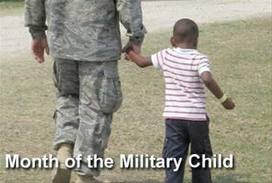
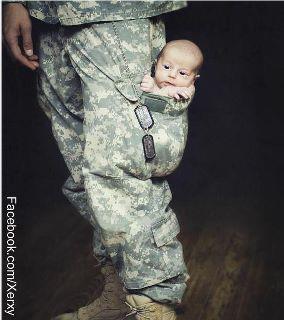
Many of you probably remember being a kid like it was yesterday, so it isn’t a leap to consider how it might feel to be a child of a military family. Like most things, it has its pros and cons. And it is unlike what the majority of Americans would perceive as ordinary day-to-day living.

Remember your first day of school or any event in your life when you were the only one who didn’t know anybody, surrounded by strangers, and in an unfamiliar environment? One doesn’t even have to reflect back to childhood to recall that feeling.     

The military child frequently has that experience and it doesn’t necessarily mean Littler Girl with Flagattending a new school here in the States. It could be a new school in another country. Saying goodbye to friends you may never see again and meeting kids who have yet to become friends is par for the course.

Remember taking your child to school for the first time and experiencing not only their separation anxiety but your own? Being fully present as your child managed to morph into the ole ball and chain around your ankle as you tried to make your way to the door despite the ankle weight causing you to drag your foot across the floor?

How about holidays like Thanksgiving when families come together or birthdays, graduations, proms, first dates, heartbreaks, doing whatever it takes – to celebrate… knowing that your dad or mom or sibling will not and cannot be there to share the occasion with you? At least not in person. Some of those occasions just happen to be once in a lifetime events. Military children endure that experience as part of the sacrifices they routinely make for US.

The National Military Family Association helps to raise awareness and funds that are designated for programs and support specifically for the military child – OUR unsung heroes. Currently, individual donations for Operation Purple Heart for the Month of the Military Child are considerably lagging behind last year’s support.Diverse Girls

So, you know where I’m going with this. Can you hear opportunity knocking? I can!  I know, oh no, here she goes! Bear with me. It’s my last blog post of the month. I want to be sure that you understand just how important you are to this mission. As a former military child, I’m asking you to please join me in supporting the children who honor our country and support us all as a way of life. Your support really is a Win-Win for everyone!

MC900431631[1]5 Minutes, $5 and PASS IT ON! That’s it. That’s all. Oh, and this…

Click on the Link – http://www.youtube.com/watch?v=hcYQMx_Izbg


To donate, click the link below.

http://www.militaryfamily.org/get-involved/donate/giving-opp/

NOTE:  Be sure to type “GrowGratitude” in the Comments section.

If you prefer to DONATE BY PHONE, please call  703-931-6632, ext. 325. Be sure to mention GrowGratitude” !  

THANK YOU FOR YOUR SUPPORT!!

See You Next Wednesday!Pink Heart    OXOXOXO

Leave a comment »

How Jackie Robinson and the Movie, 42, Lays to Rest Rap’s Rationale for Using the “N” Word

I went to see the debut of the Jackie Robinson movie, “42”, and left feeling some kind of way. Rita ProfileSometimes I think I see a movie through a somewhat different lens. I’m not sure why that is – if it’s just my nature or possibly the result of being African-American. I’m guessing it’s a combination of the two. It is that combination, coupled with being from a generation not yet far enough removed from feeling popcorn and filminextricably linked to the collective historical suffering of a people that brings me to this post.

We all know the contemporary, controversial use of the “n” word, frequently touted by many rappers (and others). The fact that the use of such a word could be considered controversial intrigues me. The use of it by rappers, who happen to be predominantly African-American, perplexes me. I definitely am of the opinion that routine, pervasive use of the “n” word is by no means acceptable.

My daughter’s generation seems to have acquired what I attribute to be most rappers’ perspective regarding the use of the “n” word in rap music, which happens to have a substantial influence on a significant number of youth of all races. On more than one occasion I’ve heard a rapper’s rationale for using the “n” word; a word so historically heinous, hateful, and harmful… and in many instances, targeted towards the rapper’s own race. Are you ready for it? Here it is:

Regular and routine use of the “n” word (in rap) takes the power out of the word.

Aha! I finally get it! Yes, I can see how that could be. When you take the power out of the word, it no longer has the negative historical connotations that once created its power, right? And when it no longer has the negative connotations that created its power in the first plaRap Starce, problem solved. Makes sense to me. Except for one thing…it’s not working.

Why is it not working? Because if it was, the power that the “n” word generates would dissipate, but it isn’t.  How do we know this? Because generally when a White person refers to or uses the “n” word in virtually any context involving African-Americans, uncomfortable tension, to put it mildly, ensues. It was not intended to be a word that the power is taken out of strictly for African-Americans who hear it, use it, or may be called it. Its intention, one would think, would include taking the power out of the word by those who historically wielded the word, parlaying its power and negative connotation in the first place.

So how did Jackie Robinson and the movie, “42” manage to lay to rest the controversy surrounding the use of the “n” word so frequently used in rap music?

Because, to borrow a quote from the movie: “God built Jackie to last”. Otherwise, how could Jackie have ever managed to survive what he had to endure to break the color barrier in baseball? Not only was Jackie Robinson a super human ball player, he was a super human being…complete with awe-inspiring talent, discipline, tolerance, integrity, unfathomable self-restraint, courage, emotion, and the guts NOT to fight back. And from what I gathered and cannot imagine is the guts it must have taken not to fight back, particularly under the circumstances and times that Jackie encountered. Not to play into society’s perceptions of African-Americans, and particularly males, as being angry and violent despite the fact that anger and violence was constantly spewed at him was critical to the success of the mission. The minute Jackie displayed any behavior that reinforced the ignorant and racist perceptions of him as an African-American, the “game” was over and we would not be where we are today.MM900295247

What makes “42” so powerful is the realistic and true portrayal of what our hero endured to get where he got, fueling our ability to not only dream to be, but to be who we dream. But the brilliance of the film is its ability to connect the viewer to Jackie in such a way that you can’t help but relate to him and feel for him as a great young man and a fellow human being with a hell of an unfair burden to bear. And he bears the burden beautifully.

Now here’s where I think the movie makes its mark with the younger generation; many of whom are seemingly becoming indifferent to the nature and magnitude of the sacrifices made throughout history. The movie, keeping within a 3 year time span of Jackie’s life, incorporates some of the significant events leading up to and including the inevitable breaking of the color barrier in baseball. Key to the impact of the movie is the fact that Jackie is and remains a very young man throughout the movie and the viewer comes to see him in such a relatable way on a human level that you can’t help but feel deeply for him and his circumstances.      Bat and Ball

The pressure of being in Jackie’s position is palpable. One doesn’t have to be African-American, male, or play baseball to not only feel Jackie’s pain but actually hurt for him. To be able to understand to some small degree what it feels like to be bullied, picked on, and degraded while trying to remain courageous in the face of it all. Most of us who are inclined to see the movie have lived long enough to have likely encountered such situations and we weren’t the first or only ones designated to catapult change. So we can relate, but we can not imagine. It is these events that allow us to garner just a glimpse of the depth of pain and suffering as well as the courage, conviction, and strength of character that necessitated the ushering in of the breaking of the color barrier and what that meant for the future of America, African-Americans, and baseball.

There is a scene in the movie when a little white boy playing ball is said to be observed rubbing dirt Bat Boyon his skin as he tells his friends that he wants to be like Jackie Robinson. If it didn’t already occur, it is then that you can’t help but recognize the reach of that most momentous historical event and the subsequent magnitude of the impact of the change that was destined to come. It isn’t just about being a great baseball player that the little boy is conveying. It’s about encapsulating and emulating the qualities and characteristics that made Jackie Robinson not only a great baseball player, but an American hero and more so, a great human being. It can be done without using the “n” word, in spite of the “n” word, and most definitely in light of the history of the use of the “n” word.

See You Next Wednesday!     Pink Heart         OXOXOXO

Please note that donations for Military Child Month are underway and your help is needed. Please consider giving $5 or any amount you can give to the National Military Family Association. The link directly to the association and the phone number if you prefer to call is below. Be sure to type GrowGratitude in the comments or mention it when calling. Thank you for your support!

http://www.militaryfamily.org/get-involved/donate/giving-opp/

703-931-6632, ext. 325

Also, feel free to check out the Military Child Month blog post. Let me know what you think!

https://growgratitude.com/2013/03/27/lets-growgratitude-for-military-child-month/

Comments (4) »

The Little Blog That Could…

Rita Profile

Remember the children’s book,The Little Engine That Could”? I don’t readily recall the specifics of the story, but it was generally about a small train engine with a long line of cars in tow that had to make it up and over a seemingly insurmountable mountain. None of the larger train engines would agree to try to pull the cargo. As the tiny train struggled to ascend the mountain, it began chanting the mantra, “I–think-I can, I–think-I can, I-think-I can”, which it successfully utilized to motivate, build momentum, and chug its way up the mountainside. No doubt it was an extremely difficult endeavor for the ambitious little engine. 

But from there, it was all downhill, so to speak.

blue train

The engine, knowing the worst was behind him, began chanting: “I-thought-I could, I-thought-I could, I-thought-I could” all the way down the other side of the mountain.

What was required for that little engine to manage to maneuver the mountain: a vision, motivation, ambition, courage, strength, perseverance, and optimism. Quite a combination of characteristics! Armed with these assets as its base, many endeavors would be more inclined to be successful.  Relatively reasonable, right?

green mountain

When I started blogging, I had a vision.  You’ve got to see it to be it!     

In other words, you have to be able to visualize or have a vision of what it is you are trying to accomplish or become. Without that vision, you’re unlikely to see your efforts come to fruition. Seeing is believing and believing is deeply rooted.

I was motivated and timing was key. I have a passion for writing and I knew I needed to resurrect that outlet that had previously served me well. I was exactly where I needed to be in order for the blog to come into being. But beyond that, I had a vision that my blog would be more than just my

telescope vision

voice, touting my perspective. My blog had to reflect who I am to some extent as well as what I think. The two are distinct. At the heart of who I am lies a pervasive deep desire to make a positive difference in the lives of others. And as you likely know, actions speak louder than words. So it has always been that my blog, GrowGratitude, would incorporate taking action and giving back. I just wasn’t sure how or when but I figured that the blog would take shape as it unfolded.

It takes a willingness to be vulnerable to share your thoughts and personal perspective with the “world”. Being vulnerable is not easy. It takes courage to open up and publicly reveal your personal experiences, perspectives, thoughts, flaws, failures, desires, and dreams. Have you ever had someone tell you that you were so brave to do whatever and that they could never see themselves doing that? Odds are they never will. If you can’t see it, you can’t be it. You have to have courage to let the inside out and the outside in.  I don’t like feeling vulnerable, but I do like being who I am. It’s about being my authentic self not some pre-conceived made up façade or false self personally tailored for presentation to the world. Showing you who I genuinely am, and being o.k.

female writer

with whatever that means for you is a gift I give myself. Interestingly, it gets easier as I get older. So, while the writing comes somewhat naturally, the willingness to be vulnerable is a process.

So I took to my laptop and began writing. I made a list of “topics” to blog about so that I would be ahead of the game. To date, I have yet to refer to that list as a source for blogging. I do know it will come in handy, though, at some point. Thus far, my weekly blog posts have pretty much been off the cuff and initiated by sporadic events or thoughts. That works for me as I tend to be a person who goes-with-the-flow. Although I must admit, going with the flow, due to its relative uncertainty, can have an anxiety-laden effect which kind of negates the whole go-with-the-flow mindset.

Once I press “Publish”, my personal thoughts are out there for the “world” to know. Not only are they out there, but I’m seeking your response or perspective in return.  It takes a certain amount of strength, perhaps of character, to open up to a world of virtual strangers with the hopes that what you have to share is of some value, has some meaning, or makes a difference in that moment or that day or their life. My hope is that you “like” the post and that you find it worthy of your time.

So where am I going with all of this? As you may know, April is Month of the Military Child and Childrens MonthGrowGratitude, the little blog that could, wants to help give back to our country’s little heroes who routinely make difficult sacrifices in order for our country’s grown-up heroes to protect and serve.

As a former military child, I know personally some of the sacrifices these children make. As a result, I will always have a special place in my heart for the children of our country’s great military.

“I-think-I can, I-think-I can, I-think-I can”. But I KNOW I can’t without your help.

Please help me make this happen!!

http://www.militaryfamily.org/get-involved/donate/giving-opp/

Support Military Kid

Take 5 minutes to give $5 and forward this post or the donation link above to as many people as you can and encourage them to do the same.

Let’s give back to the heroes behind our heroes. They deserve our support and I am grateful for your support! All proceeds go to the National Military Family Association.

Pink Heart

See you next Wednesday!           OXOXOXO 

Leave a comment »

Hellooooo…Is Anybody Out There?

This morning I got on Facebook and found myself alone. How does that happen? Yes, it was rather Rita Profileearly on a Saturday morning, probably somewhere in the neighborhood of 5:14a.m.ish (note to self: does that imply that you had nothing to do Friday night?) And it’s not like I have a lot of FB friends, relatively speaking. But it really did feel kind of eerie. Naturally, THAT got me wondering…what is the effect of being on FB as opposed to the effect that FB has in general, and are the two mutually exclusive?  I’m interested in the former as opposed to the latter. In other words, what actually happens to you while you’re on FB from a psychosocial perspective? Of course, this is coming from someone who clearly does not get on FB enough or perhaps I wouldn’t have posed the question (note to self: find out average amount of time FB folks log-on per day, per week…and am I among the average?!)  I have to wonder, who out there views FB in the way that I do?

Are there other people just like me who one day, wake up, log-on, only to find themselves “out there” on their own?

It’s the internet we’re talking about, the World-Wide Web for crying out loud! Has anyone other than me ever experienced this?

Thinking Man2

How can anyone be alone in the “world”?

So, I had to ask myself the difficult questions: Should I make more friends…or worse, should I have more friends? Do I need more friends? Is having more, merrier? I’ve got friends who have ten times as many friends as I have. Do they really know who their friends are? Does it matter? Do other people feel this way or have these thoughts?

MC910216363What is the perception of me on FB? Is there a perception of me on FB? Is my infrequency frowned upon? What if nobody “likes” me? Likes are powerful. When I see a whole bunch of “likes”, it gets my attention. I need to know what I’m missing out on. So I read what’s posted, and then I have to decide whether to”like” it or not. With the simple click of “like”, I have the potential power to contribute to your outcome and quite possibly, your mood. I like being “liked”.  When you “like” me, it makes me feel good. I feel as though I’ve made a meaningful contribution to the “world” in some small way. It conveys that what I’ve said is of value or appreciated on some level. Yeah,” likes” can be pretty powerful, especially in large numbers!

When you’re sitting staring at the screen or perhaps multi-tasking while interacting with a FB “friend”, what’s going through your mind? Does FB command your complete attention? The inquisitive part of me has Google written all over it. And even the word Google has me curious. Why? Because it does not come up as a misspelled or unrecognized word as I’m typing it.  But google with a lower case “g” comes up as an unrecognized word. Even the unrecognized word suggests that something is going on that I know I haven’t necessarily thought about or considered before this moment. At least not to this extent.

Is “google” a word that has just recently become part of the English language or did the word google exist before Google existed?  More research is clearly needed. Just give me a minute, I’ll be right back…

MM900236301 Ok, I’m back. Hey, where’d you go?! Just kidding. So, here’s what I discovered. I love playing detective! (No, that’s not what I discovered).  In any event, Google is a relatively new term that has become part of the English jargon. So, the word google with a lower case “g” evidently did not exist prior to the company (in case you didn’t already know that). According to dictionary.com, the origin of the word Google is from 1998 with the founding of a leading Internet branded search engine and originated from the mathematical term, “googol”.  The verb, “google”, means to search the internet for information or to use a search engine, such as Google, to search information.

Did I just digress or what?!

Ok, back to Facebook.

So, I wrote on my timeline- or was it my wall? I honestly don’t know. Anyway, I typed, “Hellooooo…Is anybody out there?” And I waited. And waited some more.  And I wondered how long I would wait. And then, YES! I found a “friend” or I should say a “friend” found me. And what better friend than family? And that’s when I heard the voice in my head (No, I don’t really hear voices) It was my deceased father’s voice (No, he didn’t speak to me from the grave). So, I guess to avoid any potential misunderstandings or thoughts of concern, I should say, I recalled hearing what my father used to say when I was growing up: “Always remember, when no one else is there, family will be”. You get the point – family’s got your back. And in this case (as is often the case), it proved true. My niece came through! What a relief. I really wasn’t alone. Next thing you know, my sister-in-law “awakened” and then another “friend” and another.  It was like “being there” as each friend woke up and greeted the world! In a surprisingly short period of time, I was 

MP900412062 (2) among a small community of online awakening inhabitants chattering away as the sun came up. It takes a village. Now the “world” was as it should be. I have to say, it was a pretty cool way to start my day!

Also, FYI, the average number of “friends” that the 1.2 billion Facebook users have is 120. Yay, I’m average! 🙂 

Thanks for taking time out to join me!

Please Don’t Forget – April is “Military Child Month” and GrowGratitude is raising funds for the National Military Family Association!

Support Military Kid

Please consider making a $5 donation (or any amount you would like to give). The process is fast and easy. Click on the link below to go directly to the National Military Family Association’s secure donation page.

 http://www.militaryfamily.org/get-involved/donate/giving-opp/

Be sure to write “GrowGratitude” in the Comments section so that donations can be tracked for this important cause.

NOTE: If you prefer to donate by phone, please call Caroline Rasmus at 703-931-6632, ext. 325. Be sure to tell Ms. Rasmus that you are donating on behalf of ”GrowGratitude” so that your donation will be included in the effort to reach our goal!

The National Military Family Association has been the leading 501(c)3 charity helping military families of all ranks and Service branches. Their network of more than 1 million military family members is among the largest in the U.S.

If you haven’t had the chance to check out the blog post regarding our nation’s military children, click  here:

https://growgratitude.com/2013/03/27/lets-growgratitude-for-military-child-month/

Pink Heart   As always, truly grateful for your support!          OXOXOXO

See you next Wednesday!                          


References/Resources:

Statisticbrain.com: number of Facebook users as of 2010

Facebook.com: average number of “friends”/Facebook user

Dictionary.com: origin of word “google”

Leave a comment »

Let’s GrowGratitude for “Military Child Month”!

 Rita Profile

April is “Military Child Month” and GrowGratitude is on Board!

capt_1048976728_war_fort_campbell_f

This post is in honor of our nation’s military children and the heroic sacrifices they routinely make as part of being in a military family.

GrowGratitude Needs Your Help to Increase Awareness and Support for These Young Heroes. Please take a moment to read this post, share your thoughts, and PASS IT ON!  

I was born a “military brat” and have a special place in my heart for the children who are members of military families. According to Wikipedia, once a brat, always a brat. I did not know that.  “Military brats” describes children of a parent(s) serving full-time in the armed forces and also refers to a unique subculture and lifestyle of American military brats.” That may help explain why my heart wants to help (and a few other things).


1546_247296702067687_130533634_n

Fortunately, I believe the perception of “military brat” has changed since my childhood. At that time, the perception seemed to be that being a “military brat” meant gallivanting around the globe, as if it was a “privilege” bestowed upon the very few. And I guess, to some extent that is sort of true. But what We, the People, seemed to forget or at least not acknowledge or perhaps did not realize or consider, is the NOT so “glamorous” aspect of “gallivanting the globe” from the vantage point of the military child.

It is from this perspective that we find irrefutable evidence for and the importance of celebrating these heroes; our heroes, who routinely make profound sacrifices as part of our country’s security and protection. Some of those sacrifices have the potential of having life-long effects and can become consciously or unconsciously a part of how one views and experiences life.

Some sacrifices are unimaginable.
download

We owe our military children much gratitude, acknowledgement, support, understanding, appreciation, and more.

From a personal perspective, life as a military child was not easy. One of my most vivid memories was when my father was deployed to Thailand as his final service to our country before retiring from the U.S. Air Force. My father was expected to be stationed there for a year before we would see him again. I had just turned 9 years old and it was late Fall around Thanksgiving time. My personal secret countdown until my father left concluded the night before. All I remember about that night was that in the morning my father was leaving us for an inconceivable amount of time. Forever, to a 9 year old girl. And I really really did not want him to go.

My dreaded morning arrived quickly. I don’t recall if I slept at all. But I do recall feeling as though something traumatic was happening and there was nothing I could do about it. Nothing! As I went downstairs, my father and mother stood in the dining room making last-minute preparations and checks. My father looked so handsome in his uniform.

Father and Daughter

The time came for me to leave for school. My father turned to me and asked me what I wanted for Christmas. I was trying to be so strong and I could tell that he was trying to be strong too. The inevitable happened and the tears began to flow uncontrollably. “I don’t want anything”, I sobbed, as the tears streamed down my face. At the age of 9, I recognized the pain on my father’s face and I knew he too was hurting and definitely did not want to leave us either.

I walked to school that morning, head low, heart heavy, thinking about what it was going to be like when I get home from school, knowing that my father was somewhere far far away for a very long time. My heart remained heavy that entire day as thoughts of my dad plagued my mind. I simply could not imagine life without my dad for such a long period of time.

My world had changed and everything in it somehow looked and felt different.

There are moments in life that you know are going to penetrate deep into the recesses of your mind and heart as the moment unfolds. And there are times when you don’t consciously realize or recognize the full effects or the magnitude of a particular moment until sometime later in life, or perhaps never. These moments can be, undoubtedly, defining moments, whether we are consciously aware of them or not. Their influence is deeply rooted, with considerable potential to affect us throughout the course of our lives.

I can still clearly see the pained expression on my father’s face and feel the depth of sadness that was my companion until my father returned home. No matter what was going on, there was an ever-present sadness casting a cloud over every life event and experience that deploymenthappened during that time. It turned out that my father would be gone longer than one year as originally expected and when he returned home, he returned as a disabled veteran.

My father retired from the U.S. Air Force having served our country for more then 20 years.

Looking back on my childhood years as a “military brat”, I now and at different points in my life, realize the impact that single experience alone had and still has on me to this day. It’s good to be conscious of that to which you were once unconscious. Sometimes having that awareness helps increase understanding of the nature and the lasting effects of being a military child.

Check out the slide show below regarding our nation’s amazing military children. Some of it may surprise you. Just take a moment. Imagine what it might be like to walk in their shoes.

Military Child Slide Show 

During April, the “Month of the Military Child”, GrowGratitude will be raising funds to help support our military children. And in a sense, they are indeed, OUR children.

The goal  is to raise $5,000. All proceeds will go to the National Military Family Association. 

The National Military Family Association has been the leading 501(c)3 charity helping military families of all ranks and Service branches. Their network of more than 1 million military family members is among the largest in the U.S.

Infant Draped in flag

To make a $5 donation to the National Military Family Association, click on the link below. 

The link will take you directly to the “Giving Opportunities Page”. Click “DONATE”.

To donate $5, click “OTHER” and enter $5 or a different amount, if desired.

 http://www.militaryfamily.org/get-involved/donate/giving-opp/

NOTE:  BE SURE TO TYPE “GrowGratitude” IN THE COMMENTS SECTION SO THAT WE ARE ABLE TO TRACK PROGRESS IN MEETING OUR $5,000 GOAL!

If you prefer to DONATE BY PHONE, please call Caroline Rasmus at 703-931-6632, ext. 325. Be sure to tell Ms. Rasmus that you are donating on behalf of “GrowGratitude” so that your donation will be included in the effort to reach our $5,000 Goal!

You can donate with confidence, because they are top rated by all charity evaluators:

  • 4-star rating from Charity Navigator 10 straight years – a distinction attained by only 1% of U.S. charities
  • Seal of Approval from the Better Business Bureau’s Wise Giving Alliance
  • A+ rating from CharityWatch.
  • “Buy” rating from Nonprofit Investor

I am truly grateful for your support and I know the children will be as well.

Let’s Make It Happen and Thank You!

Pink Heart                                                         OXOXOXO

See You Next Wednesday with an Update on the Mission to Grow Gratitude!

Comments (5) »

Passing Perceptions: The Caveman, the Ogre, and the Perception-Panicked Parent

Rita ProfileI’ve lived a lifetime in this skin and I’m pretty confident I know the person within. I am always in awe when I encounter experiences and situations that perplex me or intrigue me based on where we are as a society; evolving as a species, which is essentially a prerequisite for the survival of humanity.

Perception, according to Dictionary.com: the act or faculty of perceiving, or apprehending by means of the senses or of the mind; cognition; understanding.

I recently saw a TODAY Show interview with actor Nicholas Cage, who has the lead in an upcoming animated movie, “The Croods”. I used to be a big fan of Nicholas’ and to some degree I still am (despite media reports of Cage’s “personal troubles” and more so, the infamous nature of those troubles). I remain a fan primarily because of my overall benefit- of -the -doubt approach to my perception of people. In other words, unless or until you show me otherwise, you are automatically given the benefit of the doubt. In that way, almost anyone that I encounter is level on the same playing field. At least to start.Caveman : Cartoon caveman with a club.Isolated on white

“The Croods” is an animated family film about a caveman family forced to go on a road trip when their cave is destroyed. What struck me about the interview is that Nicholas Cage, who has a 7 year old son who he described as a “connoisseur of animation”, confirmed that he had turned down the lead role in the original, wildly successful movie Shrek. As we know, Shrek just happens to be an ogre. When asked if it was true that he turned down the role because he thought the character Shrek was ugly, Cage responded:  

“The news said it was because of vanity, I think that’s a bit strong. The truth is I’m not afraid to be ugly in a movie…but I must say that when you’re drawn, in a way it says more about how children are going to see you than anything else and so I care about that. I want kids to look at Grug (lead character in The Croods) knowing he’s a little scary, but he’s a big teddy bear and I wasn’t sure I could do that with Shrek”.

Ummm, isn’t Shrek basically a big ogre that you (i.e., kids) really just want to embrace with a great big teddy bear hug? I mean, I know he’s an ogre, but can a caveman be any more of a huggable teddy bear than an ogre can? I’m thinking no. And isn’t it what we learn about the “character” of Shrek, as opposed to Shrek, the character, that is part of the heart of the message of the movie?

I don’t know that I would describe the character Shrek as scary. Different, perhaps, which I guess to some can be scary. But Shrek, the character, in and of itself is a pretty loveable, huggable kind of creature. At least, that’s my perception. I think the role was perfectly cast with Mike Myers as Shrek. And perhaps that’s a big reason as to why Shrek is loved so much. But I don’t think that’s the only reason. Yes, Shrek would probably be perceived differently if Nicholas Cage lent his voice to the character. However, even with Cage’s considerable difference in voice and energy compared to Mike Myers’, the character, the script, the plot, and the movie were all designed to have Shrek emerge and remain a can’t-help-but-love character. So all was as it should have been.

Perceptions are incredibly powerful for a variety of reasons including the fact that we tend to see the world based on our perceptions. In that case,

If reality is 9/10th  perception, what is it we’re saying as well as conveying about real life and what reality matters, as a result of our sometimes fairly faulty perceptions?

Four years ago, I was in a department store when a young girl – probably about 6 or 7 years old – walked down the aisle I was in with a man, presumably her father. As I stood looking at whatever item I was considering purchasing and they searched for whatever item that brought them to my aisle, I could overhear the father speaking with his young daughter. Little_girl_cartoon : a cute little girl  Stock PhotoThe girl had a doll in her hands that her father was evidently going to purchase for her, but he clearly had some concerns about the doll his daughter had selected. It wasn’t that he was upset, it was something less volatile and yet equally unsettling. It was his persistence that practically bordered on insistence. He couldn’t let it go. His daughter was quite content with her selection, but daddy wasn’t having it. He tried several different ways and times to query his daughter about her certainty in wanting the doll she chose. He failed miserably. Price was evidently not an issue. He let her know there were lots of dolls, any of which she could have. She let him know that she wanted the doll she selected. And yes, she was certain.

I desperately wanted to commend that little girl for sticking to her selection. She knew what she wanted and she picked it out without hesitation or second thought…or perhaps, after considerable thought. And better yet, she stuck to her guns when her father tried to instill doubt about her choice of dolls. It was her father’s perceptions that became the problem not the doll itself. The perception was that the doll would prove to be problematic for whatever reason(s), but I’d be willing to bet that those reasons never crossed that little girl’s mind…at least not without the intervention of other people’s perceptions.

I don’t know if that little girl left the store that day with the doll she originally selected. I often wonder. I wonder even more about her father. And I wonder if the little girl ever wonders why her daddy questioned her so. Probably not. She just wanted her baby doll, and keeping it was her focus.

Why couldn’t the father just accept the doll his daughter wanted? What was his perception of what was occurring that made him clearly visibly uncomfortable? Perhaps it was because he couldn’t figure out a way or a good enough reason for his daughter NOT to have the doll she probably proudly picked out. How was he going to explain why his white daughter chose a brown-skinned doll out of all the dolls she could choose from and what will people think?Black Dolls : African American Baby Doll Portrait lying under turquoise blanket

Six year olds are generally not concerned with other people’s perceptions or what other people think.  They make their decisions based on their own personal desires and what makes sense to them. And in applying the same benefit-of-the-doubt mindset, maybe daddy learned something invaluable from his daughter that day.

We have much to (re)learn from the young who have not yet been impacted by society’s collective pre-conceived perceptions and problems. And, perhaps, it will be the children that lead the way or at least, hopefully, remind us of our child-like nature and what reality matters.

Pink Heart        See you next Wednesday!   OXOXO

Leave a comment »

You Can Take the Girl Out of the Country, But Can You Take the Country Out of the Girl?

One of the amazing attributes about America is that you can venture to a variety of locations and find the lifestyle so completely foreign from what you’re accustomed to that you can actRita Profileually forget that you haven’t left the country. The place may have various customs, language and dialect, diverse people and a completely different landscape. I love that about us! We get the opportunity to experience a world of diversity right in our own back yard. And, like Dorothy, we recognize when we’re not in Kansas anymore…figuratively speaking.

When I relocated to the merry old land of Oz-aka, the big city- I was a young, wide-eyed girl seeking a career. Like Oz, the bright lights, big city held the promise of opportunity. So I packed up my belongings consisting of common sense, a compassionate heart, and courage and eased on down the yellow brick road. I wasn’t at all sure where that road would ultimately lead me but I was willing to follow, follow, follow, follow, follow the yellow brick road. And so I did. And you can follow, follow, follow ME by clicking on the “Follow” tab in the bottom right corner of your screen. But I digress.  🙂

For some reason, people know I’m not originally from the city. It has always been that way and still is despite the fact that I’ve lived here for nearly 3 decades, far longer than anywhere else in my life. But enough people have said it that I would be in denial to think that there isn’t something about me that, in some instances, is being communicated non-verbally.

Still, I can’t help but wonder…what is it about me that I’m saying non-verbally? What are people sensing that I’m not seeing?

It’s in the way that I walk and the way that I talk. It’s my demeanor, my mannerisms. I haven’t been able to shake it and I haven’t tried to nor have I wanted to.

There’s something about the country that says home to me. Perhaps it’s childhood calling. And I miss the mountains that I so took for granted throughout my youth.  Home, a peaceful, serene place where the rat race pace of life is a somewhat slower, more relaxed experience. A place where the weight of the world is seemingly lighter and one can more readily become one with nature. A place with a stillness that I long for.

I realize how much I’ve become subtly acclimated to the city over the years. For the most part, it didn’t happen consciously, which is often the case. But I have necessarily become “citified” over time and therefore am inclined to see the world a bit differently then before I lived in the city and differently then I would if I still lived in the country. It’s all part of the process. I love the city. I love the energy, the diversity, and the opportunities. I am absolutely a city girl with a great big country heart!

Yes, you can take the girl out of the country and she can become acclimated to her surroundings, but you’d be hard-pressed to take the country out of this girl. Dorothy was right. There really is no place like home. And evidently, it shows!

Pink Heart

Comments (4) »