I’ve lost track of the number of times that I have been asked, “What are you, anyway?” I don’t think losing track is as much a result of  the length of time I’ve lived, as it is a reflection of how frequently I’ve been asked that question during the time that I’ve lived. What has changed during that time frame, aside from the number of people prone to being asked the question, “What are you, anyway”? Perhaps it’s a willingness to share, or more so, a deepening desire to discuss or express the experiential intricacies of being biracial in America in an effort to increase insight, understanding, and acceptance of biracial individuals.
It strikes me that the question is “what” as opposed to “who”, but I guess if asked “Who are you anyway?” the door would open for a range of responses and reactions. The same could be said of the “what” question. Except in America, if asked the “what are you” question, one of the initial potential responses is likely to be in reference to race or ethnicity. For the biracial American, it is the first probable response primarily due to the frequency of which we are asked the question. We’re not hung up on it, you are. We know what’s coming. America is a focused country when it comes to navigating “what” we are dealing with in contrast to “who” we are dealing with. After all, accurately or inaccurately, one helps inform the other, does it not? At the very least it allows the potential for a stream of preconceived ideas and beliefs to begin flowing. On the other hand, it can open a door of opportunity for creating conversation and greater understanding. It all depends on how you choose to view it, given being on the receiving end of the “what–are-you” question.
“What are you, anyway” became a much more pressing question when my father was retiring from the military and we began life as American civilians. I don’t really recall issues of racial identity prior to that time, probably due to my young age. That’s an important distinction to note regarding my experience relative to my siblings’ and other biracial or multi-racial Americans at that time. This was the early 1970’s, small, back-mountain town, overwhelmingly white and an interracial family known around town before we arrived in town!
My father would complete his military service to our country overseas while his family settled into the  community in which he grew up. My parents felt this was a suitable community to remain until my father retired. And though there had been historically a miniscule number of African-Americans in the town when my father was growing up, that number dwindled until all-tolled, there may have been 15 people of color, including me and my 6 family members (well, 5 given my mother is white). Most were adults or elderly. And so it was in this small back-mountain town that we rode in and shook things up or rather, I should say, got shook up… or both.
For many of the children that I attended school with and their family members, I or one of my family members were the first “real, live” black people they ever saw aside from the rare television shows with black characters/roles -if one could consider television at the time, “real and live”. Now, take me and my “high-yellow” siblings, put us all together with my black father, white mother, and black grandmother, and oh boy, ain’t we got fun?!
Did I mention it was the 1970’s?…
I was not trying to be white as I was sometimes accused, predominantly by people who looked more like me than those who didn’t. I was just trying to be – which became exhausting, if not impossible. What did you expect? All my friends were white. All my classmates and teachers were white. All my coaches were white. The bus drivers were white. All the cute boys (and their parents) were white. All the business owners and church members were white. And at home, my mother was white (and British). And when my father returned home from overseas nearly two years later, he was black, just like when he left! And his children were/are black like him. What?! And thus began the debates that my father and I would engage in (and sometimes my mother, while my grandmother listened silently from the next room). Our debates were sometimes heated as can be the case when discussing matters of race. But oh, how I loved debating with my father and would love to know what his stance would be today had he lived the past 30 years. Still, I got what he was saying and trying so desperately to get me to understand: I am black because that’s how “the world” sees me and will treat me. Still, I wasn’t trying to be white. But I was trying to understand how my white mother disappeared from the equation. What do you do with her? Can we hide her in the closet?! No, because sooner or later she’s going to come out (or at least want to)!
 My mother made the home as did many and most mothers today. She was an immaculate housekeeper, did the cooking, shopping, laundry, took care of her 5 children and mother-in-law, and most other things women who stayed at home in the 1970’s did. In other words, she was a presence that would invariably and inevitably have a personal and powerful impact on me and my siblings. Did I mention that my mother is white and British? It wasn’t about hiding that part of me, consciously or unconsciously. It was about how to incorporate the other half of me and express it without being ridiculed for it. I couldn’t hide my mother if I tried and I had no desire to. So, as a teenager I began to learn the language of being biracial. At the time, mulatto seemed to fit best. And so I became a mulatto, but then that label usually warranted explanation or elaboration. Ten minutes later I would part ways with whomever, probably completely unsure whether I answered their “what are you, anyway” question to their or my own satisfaction.
Why do people feel compelled to quench their curiosity of knowing what you are?
It’s all about identity and identity can be fluid. When you’re developing a sense of self or identity during adolescence, the person of color and the biracial person also have to develop a racial identity, unlike white Americans. I’ve been all kinds of “identities”, but I’ve never been white. My identity has always incorporated my black side and at times black was exclusively how I described my racial identity. It kept things simpler, but inside I knew I had to somehow reconcile the real, whether you like it or not, other half of me that clearly contributed to the creation of who I am in more ways than one!
Oh no, this must be my attempt to be white. It’s all about perceptions. I could claim my African-American roots and was expected to do so without claiming my other half; the half that completed the whole. How could one be faulted for that? But I was. It was the one drop rule. Historically, if you had one drop of black blood coursing through your veins, you were considered black and therefore profitable when it came to tallying a slave owner’s assets and property. I don’t have a problem being black. I love who I am. But who I am, on that level, is not complete without acknowledging my mother’s blood pumping through my veins. Who I am, on that level, does not honor the British cultural influence and heritage that arguably has influenced a significant part of who I am and how I see the world. Who I am includes and incorporates both races and both cultures as well as my own experiences and personal perspectives. I am a product of my environment in many ways.
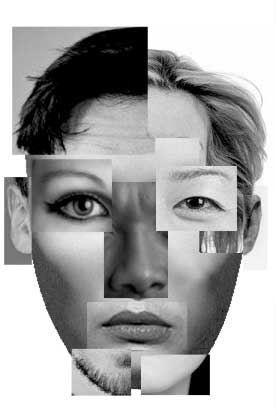 Ask me what I am today and I will tell you that I am human. I am American. And specifically, I am a biracial, bi-cultural African-American or an African-American who happens to be bi-cultural and biracial or “mixed”. For the moment, I’m satisfied with that identity and I think my dad (and mom) would be too.
So, what are YOU anyway?
See You Next Wednesday!  OXOXOXO


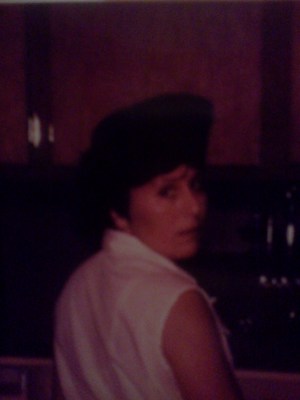 bring into the world. From then, it was back and forth between the United States and Europe. Of the 5 offspring, 1 was born in England, 2 were born in France (my birthplace), and 2 were born in my father’s childhood town. In fact, my sister was the first African-American baby born in the town’s hospital.


![MP900049590[1]](https://growgratitude.com/wp-content/uploads/2013/03/mp9000495901.jpg?w=300&h=270)
 growgratitude.com