Posts tagged British

Being Biracial: Up North, Down South, and Across the Pond

Rita Profile

Well, this is it – my last post for “Being Biracial Awareness Month”.  Wow, did it go fast! I almost feel a sense of sadness if that makes any sense at all. Writing can truly be a profoundly personal experience and this month’s blog posts most definitely have a home in my heart. I hope you’ve found the journey to be enjoyable, insightful, and engaging.

I don’t think that it’s news that generally, when it comes to racial discrimination in America, you’re more likely to know “where you stand” from a southern vantage point than from a northern one. The racial compass is clearer and more easily read in the South. In other words, racism has always been more overt in the South and covert in the North. The advisement to keep one’s friends close and one’s enemies closer sometimes requires a bit more digging to do so in order to uncover the depth of racist dirt dug from northern soil as compared to southern soil.

Despite the pervasiveness of racism across the nation, acknowledged or unrecognized, hidden or otherwise, it must not be overlooked or understated that there are millions of good-hearted, non-racist people across America and around the globe.

Take Me Out of the Ball Game                           

softballgirl  th_Girl_Cartoon1

Most of my childhood was spent growing up in a mid-Atlantic, east coast state during the 1970’s. Naturally, given my appearance, the times, and the nature of the place, I was destined to be targeted. And targeted I was. But still, despite how many times I was chosen to be picked on or discriminated against, there were also times that I recall people going out of their way to have my back, bravely distinguishing themselves from the masses. People like these you tend not to forget…ever!

I remember a girl from my childhood who lived around the corner from me. The two of us played together on an intramural summer softball team. She had always seemed nice to me as had the majority of my teammates. Being the only person of color from the only family of color in the community was something, by that time, I had come to experience as par for the course. The problem was that no matter where I went, I always ran the risk of someone feeling compelled to communicate their racist perspective to me, at me, and those who were with me. And so it was inevitable that I would encounter such an experience on the ball field.

I was about 12 years old and the softball team that we were scheduled to play was an away game with a team in an even more rural community than what I lived in. When we arrived, a fair amount of spectators were in the stands as we took our positions on the field. I was playing outfield when the incident occurred and I will never forget it. Silence can be a killer in a number of ways. Long story short, a male in the stands began yelling the “N” word. Of course, everyone looked at me knowing I was the only one he could be referring to. The male carried on with his racial slurs until finally, and thankfully, we were all back in the dug-out gearing up for our turn at bat. By that time, I had lost focus in playing the game and felt humiliated. But just when you think you can’t feel any worse, something or someone comes along and restores your faith in humanity. She said for me not to worry or feel bad about the person in the stands as they were just stupid. That was it. Pretty simple, huh? At a time when I felt helpless to defend myself, my neighbor and teammate was the one person willing to acknowledge that anything out of the ordinary was occurring. I don’t fault any others for not feeling compelled to support or defend me, but I will never forget the one person who found it unacceptable not to.

Crossing the Mason-Dixon Lineconfederate flag
As an interracial family, the idea of crossing the Mason-Dixon Line during the 1970’s warranted a bit more consideration and concern than the mainstream minority had crossing that border. At that time, a number of southern states considered interracial marriage to be illegal. That coupled with the expense of traveling limited us. As a result, it was a trip that we rarely made despite having family living in the South.

A couple of times a special occasion came up that resulted in a trip south. During these rare times, the issue of whether my white mother could accompany us would rear its ugly head. As a teenager, I felt passionate and adamant about my mother being able to join us, especially for a family affair. My father, being older and much wiser, considered the risk we would be taking by having my mother travelling through the south with us. Still, in my mind, it was unacceptable to go and leave my mother at home and I was prepared to die in order to be. So, of the two occasions that had us travelling down south, I got my way for one. I would return home a wiser child.

You know how you can completely forget about something until someone else brings it up and jogs your memory? You could go through your entire life not recalling the event as a distinct memory but when it comes back, you can’t believe you didn’t remember it in the first place! That’s how it was for the one trip south that my mother joined us for. I asked my siblings about their recall of that trip and each of us remembered something different and distinct about our adventure. All of us recall an element and sense of danger as the common denominator. My recollection involved getting lost somewhere south of the Mason-Dixon Line, just as my father feared. It was my father, mother, grandmother, me and two siblings. I recall a sense of extreme tension in the car and my grandmother’s worried expression spoke volumes as my father tried to find our way out of the woods we had traveled deep into. It wasn’t like we could call our family from a cell phone and getting out of the car to use a pay phone, if you could find one, required considering whether or not you wanted to potentially risk your life and the welfare of your family. My sister recalls stopping at a rest stop and parking between two MACK trucks in order to keep our car and its occupants out of sight and my brother remembers traffic being diverted due to the activities of a Klan rally (gulp). We would journey one more time to that particular southern state, but without my mother in tow. I have not returned since.

Meet My Other Half      bth_british_flag

I was 21 years old when I first met the British side of my family. I had always known about them, who they were by name, seen pictures and remember the rare exciting telephone call not necessarily knowing which relative was on the phone but knowing it had to be a relative from across the pond based on their accent. I love a British accent! The rush was then on to get my mother to the phone because of the rarity of the calls from her “home” due to the expense attached at the time to make an international telephone call. Technological advancements have since made cost a far less concern then when I was younger while also expanding our horizons through the creation of a variety of means for increased communication and contact around the world.

My mother always says that when she goes back “home”, she feels more like a person and not the British woman who was married to the black man, which was how she was known when she came to America. I’ve always known what she meant but I never experienced it except for the rare family reunion on my father’s side of the family. Having now met my “other half” a number of times, I totally get what she’s saying. What I know of England is what my family has shown me and what they have shown me could not make me any prouder to be half British and all family!

See You Next Wednesday!   Pink Heart OXOXOXO

 

Comments (2) »

Being Biracial: “What Are You Anyway?”

I’ve lost track of the number of times that I have been asked, “What are you, anyway?” I don’t think losing track is as much a result of Rita Profilethe length of time I’ve lived, as it is a reflection of how frequently I’ve been asked that question during the time that I’ve lived.  What has changed during that time frame, aside from the number of people prone to being asked the question, “What are you, anyway”?  Perhaps it’s a willingness to share, or more so, a deepening desire to discuss or express the experiential intricacies of being biracial in America in an effort to increase insight, understanding, and acceptance of biracial individuals.

It strikes me that the question is “what” as opposed to “who”, but I guess if asked “Who are you anyway?” the door would open for a range of responses and reactions. The same could be said of the “what” question. Except in America, if asked the “what are you” question, one of the initial potential responses is likely to be in reference to race or ethnicity.  For the biracial American, it is the first probable response primarily due to the frequency of which we are asked the question.  We’re not hung up on it, you are. We know what’s coming. America is a focused country when it comes to navigating “what” we are dealing with in contrast to “who” we are dealing with. After all, accurately or inaccurately, one helps inform the other, does it not? At the very least it allows the potential for a stream of preconceived ideas and beliefs to begin flowing. On the other hand, it can open a door of opportunity for creating conversation and greater understanding. It all depends on how you choose to view it, given being on the receiving end of the “what–are-you” question.

“What are you, anyway” became a much more pressing question when my father was retiring from the military and we began life as American civilians.  I don’t really recall issues of racial identity prior to that time, probably due to my young age. That’s an important distinction to note regarding my experience relative to my siblings’ and other biracial or multi-racial Americans at that time. This was the early 1970’s, small, back-mountain town, overwhelmingly white and an interracial family known around town before we arrived in town!

My father would complete his military service to our country overseas while his family settled into the th_air_force_logo(1)community in which he grew up. My parents felt this was a suitable community to remain until my father retired. And though there had been historically a miniscule number of African-Americans in the town when my father was growing up, that number dwindled until all-tolled, there may have been 15 people of color, including me and my 6 family members (well, 5 given my mother is white). Most were adults or elderly. And so it was in this small back-mountain town that we rode in and shook things up or rather, I should say, got shook up… or both.

For many of the children that I attended school with and their family members, I or one of my family members were the first “real, live” black people they ever saw aside from the rare television shows with black characters/roles -if one could consider television at the time, “real and live”. Now, take me and my “high-yellow” siblings, put us all together with my black father, white mother, and black grandmother, and oh boy, ain’t we got fun?!

Did I mention it was the 1970’s?…

I was not trying to be white as I was sometimes accused, predominantly by people who looked more like me than those who didn’t. I was just trying to be – which became exhausting, if not impossible. What did you expect? All my friends were white. All my classmates and teachers were white. All my coaches were white. The bus drivers were white. All the cute boys (and their parents) were white. All the business owners and church members were white. And at home, my mother was white (and British). And when my father returned home from overseas nearly two years later, he was black, just like when he left! And his children were/are black like him. What?! And thus began the debates that my father and I would engage in (and sometimes my mother, while my grandmother listened silently from the next room). Our debates were sometimes heated as can be the case when discussing matters of race. But oh, how I loved debating with my father and would love to know what his stance would be today had he lived the past 30 years. Still, I got what he was saying and trying so desperately to get me to understand: I am black because that’s how “the world” sees me and will treat me. Still, I wasn’t trying to be white. But I was trying to understand how my white mother disappeared from the equation. What do you do with her? Can we hide her in the closet?! No, because sooner or later she’s going to come out (or at least want to)!

bth_heartenglandMy mother made the home as did many and most mothers today. She was an immaculate housekeeper, did the cooking, shopping, laundry, took care of her 5 children and mother-in-law, and most other things women who stayed at home in the 1970’s did. In other words, she was a presence that would invariably and inevitably have a personal and powerful impact on me and my siblings. Did I mention that my mother is white and British? It wasn’t about hiding that part of me, consciously or unconsciously. It was about how to incorporate the other half of me and express it without being ridiculed for it. I couldn’t hide my mother if I tried and I had no desire to. So, as a teenager I began to learn the language of being biracial. At the time, mulatto seemed to fit best. And so I became a mulatto, but then that label usually warranted explanation or elaboration. Ten minutes later I would part ways with whomever, probably completely unsure whether I answered their “what are you, anyway” question to their or my own satisfaction.

Why do people feel compelled to quench their curiosity of knowing what you are?

It’s all about identity and identity can be fluid. When you’re developing a sense of self or identity during adolescence, the person of color and the biracial person also have to develop a racial identity, unlike white Americans. I’ve been all kinds of “identities”, but I’ve never been white. My identity has always incorporated my black side and at times black was exclusively how I described my racial identity. It kept things simpler, but inside I knew I had to somehow reconcile the real, whether you like it or not, other half of me that clearly contributed to the creation of who I am in more ways than one!

Oh no, this must be my attempt to be white. It’s all about perceptions. I could claim my African-American roots and was expected to do so without claiming my other half; the half that completed the whole. How could one be faulted for that? But I was. It was the one drop rule. Historically, if you had one drop of black blood coursing through your veins, you were considered black and therefore profitable when it came to tallying a slave owner’s assets and property. I don’t have a problem being black. I love who I am. But who I am, on that level, is not complete without acknowledging my mother’s blood pumping through my veins. Who I am, on that level, does not honor the British cultural influence and heritage that arguably has influenced a significant part of who I am and how I see the world.  Who I am includes and incorporates both races and both cultures as well as my own experiences and personal perspectives. I am a product of my environment in many ways.

BiracialAsk me what I am today and I will tell you that I am human. I am American. And specifically, I am a biracial, bi-cultural African-American or an African-American who happens to be bi-cultural and  biracial or “mixed”. For the moment, I’m satisfied with that identity and I think my dad (and mom) would be too.

So, what are YOU anyway?

See You Next Wednesday!          Pink Heart         OXOXOXO  

Comments (3) »

Being Biracial in Black and White

I’ve decided to declare May “Biracial Awareness Month”. May is as good a month as any. From Rita Profilewhat I’ve gathered, no such month exists and I think it’s high time one did! It needs to be a month, not a week or a day. Being biracial is an experience! In fact, it’s one I highly recommend you include on your Bucket List or among the top 100 things to try before you die. Everyone should have the experience of being biracial in America. It most definitely has its moments, is insightful, can be wildly entertaining, and touts a very interesting vantage point and perspective. Sounds like a sales pitch, but it’s not. Knowing that most of you will never personally know the experience of being biracial, coupled with my expertise on the subject, compels me to devote the month of May to “Being Biracial” and increasing awareness about that experience in America. But why should you care?

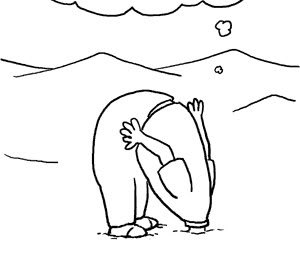
The current rate of growth of the biracial American statistic, which shows no signs of slowing down, appears to be on track for becoming one of the fastest growing racial demographics in the United States. Pretty powerful potential from a plethora of perspectives! Which means that your chances of coming in contact with “one of them” is increasing even as I type! If you don’t see it coming, it’s simply because you don’t want to. If you don’t want to see it, I’m afraid you’re in the wrong country or will need to relocate to some remote area of uninhabited humans or perhaps less drastic, find the nearest beach and bury your head in the sand. head-sandAside from that, brace yourself, we’re coming… to a community near you! After all, our President is biracial. So you are aware, but you may not have been up close and personal like you would be with someone in your community, whom you interact with or see on a regular basis.

Personally, I love being biracial although it wasn’t always that way. Being biracial in America can be complicated, challenging, and confusing. The number of biracial babies born in the U.S. has sky-rocketed during the past decade. The number of Americans identifying as two or more races in the 2010 census, increased from 6.8 million to 9 million since the 2000 census. Americans identifying themselves as black-and-white increased 134% to 1.8 million and there are now more black/white Americans than any other multi-racial category. The number of white-Asian Americans grew second-most by 87 percent.1

At the time of my parents’ marriage, the majority of states considered the union between my African-American father and white mother, illegal.  Talk about illegitimate kids! I always had a huge problem with that label, and that was when I thought “illegitimate” referred to children born out-of-wedlock. But I guess if my parents’ marriage was considered illegal then their children must have been considered illegitimate. Wow, Illegal, Illegitimate and “Mixed”. You know there’s a story that comes from securing that status. Now, let’s throw into the “mixed”, being bi-cultural as a result of having a British mother and you’ve got the makings for muses, memories, mishaps, and misunderstandings!

In the year 2000, Alabama became the last state to officially legalize inter-racial marriage2. And no, 2000 is NOT a typo. Interracial marriage remains controversial in the Deep South, where a 2011 poll found that a plurality of Mississippi Republicans still support anti-miscegenation (race-mixing) laws3. Oh, bother.th_winnie_the_pooh_49What’s it like being biracial? In the upcoming weeks, I will address some of the commonly Biracialasked questions for biracial Americans. And I welcome any questions that you might have as well. We’ll also go international by journeying “across the pond” to discover my “other half” or the Brit in me and their response to my mixed family.

Join me this month as we journey into the world of the biracial American. I’ll tackle topics such as how to respond to the most frequently asked biracial questions:  “What are you anyway?”, “Mixed or Mixed-Up?”, and Is Being Biracial Really the Best of Both Worlds?” I’ll also explore “Why Fresh Air Kids Love the Outdoors”, “Growing a Spotted Rose”, and “A Teenager’s Dying Devotion to Being Biracial”. Finally, I’m going to divulge “The One Question I Would Ask Oprah”. You may think it’s a crazy question, but it has plagued my mind for years!

So, arm yourself with whatever questions, comments, and experiences you might have because this time we’re going deep and I would absolutely love to hear what you think!

See You Next Wednesday!     Pink Heart   OXOXOXO

References:

  1.  http://www.census.gov/prod/cen2010/briefs/c2010br-13.pdf  via

http://www.businessinsider.com/the-number-of-bi-racial-americans-is-exploding-2012-9

2.  http://civilliberty.about.com/od/raceequalopportunity/tp/Interracial-Marriage-Laws-History-Timeline.htm

3.  http://civilliberty.about.com/od/raceequalopportunity/tp/Interracial-Marriage-Laws-History-Timeline.htm

Comments (6) »